

BizAndhra Newsroom Report
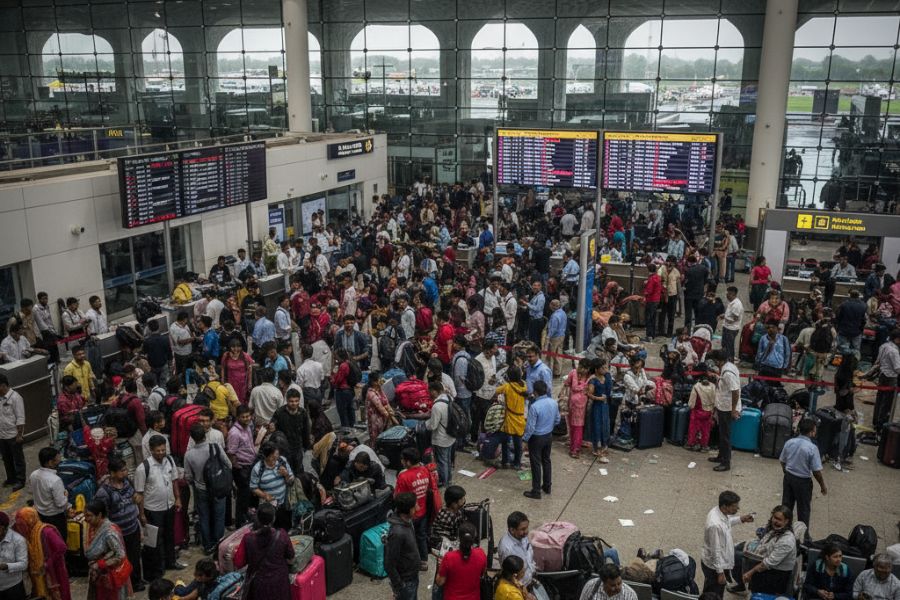
New Delhi/Hyderabad: Massive disruption swept through Indian airports on Friday as IndiGo — the country’s largest airline — cancelled more than 400 flights nationwide, plunging terminal operations into chaos and leaving thousands of passengers stranded. The disruptions, triggered by a combination of new regulatory norms and internal operational lapses, represent one of the worst aviation breakdowns India has seen in years.
Indira Gandhi International Airport in Delhi cancelled all IndiGo domestic departures until midnight, while major hubs including Mumbai, Bengaluru, Hyderabad, and Chennai saw over 100 cancellations each, according to data reported by airport authorities. Long queues, passenger protests, and scenes of overcrowding were witnessed across terminals throughout the day.
IndiGo’s on-time performance collapsed to just 8.5%, a drastic fall from its usual 80–90%, reflecting the magnitude of the breakdown.
Why IndiGo Collapsed: What Went Wrong
A confluence of issues triggered the crisis:
-
New DGCA Flight Duty Time Limit (FDTL) rules, which impose stricter weekly rest and night-flying restrictions, exposed major crew shortages at IndiGo.
-
A recent software update on Airbus A320 aircraft interfered with crew scheduling systems, worsening operational delays.
-
IndiGo’s tightly networked operations meant delays in one metro cascaded across the entire country.
Aviation Ministry officials say the airline was underprepared for the new regulatory compliance requirements and failed to maintain adequate staffing buffers.
Government Steps In
With the crisis intensifying, the Civil Aviation Ministry activated a 24×7 control room to coordinate with airports, the DGCA, and IndiGo’s command centres. The regulator has demanded detailed explanations on rostering failures and contingency planning.
Airlines have been instructed to provide real-time updates to passengers, though many reported going hours without information.
How Long Will the Crisis Last?
IndiGo has informed the government that it expects full operational restoration only by February 10, 2026, depending on whether the DGCA provides temporary relief on pilot-duty norms. Industry observers warn that the disruption may continue for several days, with ripple effects likely to last through the next week.
Aviation Industry on Edge
The meltdown has once again exposed structural weaknesses in India’s civil aviation ecosystem — from overdependence on a single carrier to inadequate staffing protocols and tight turnaround-based scheduling. For passengers, the immediate fallout is frustration, uncertainty, and long delays, while airlines face renewed scrutiny over compliance and preparedness.
For now, India’s airports remain in crisis mode as the country navigates an unprecedented airline disruption at the peak of the travel season.