

From Our Correspondent
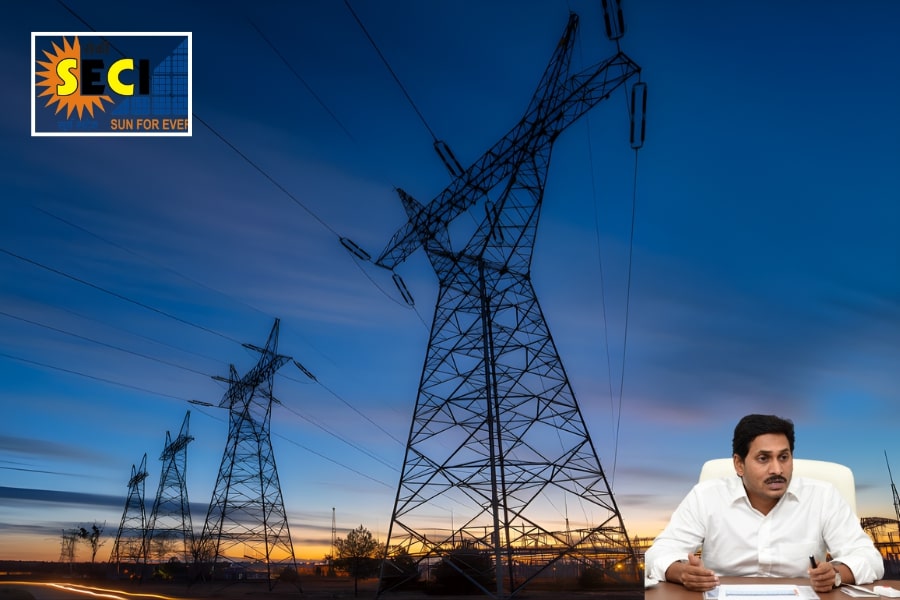
Amaravati: The solar power purchase agreement signed between the Solar Energy Corporation of India (SECI) and the Adani Group during the tenure of former Andhra Pradesh Chief Minister Y. S. Jagan Mohan Reddy has once again come under scrutiny. There is fresh pressure to implement the agreement, even as key questions over inter-state transmission charges remain unresolved. This lack of clarity could significantly alter the financial impact of the deal on the state.
According to officials, SECI has been repeatedly writing to the state energy department, urging it to begin power offtake as per the agreement. In its latest communication, SECI stated that it is ready to supply 500 MW of solar power from March, followed by another 500 MW in the second phase. As per the contract, SECI has committed to supply a total of 7,000 MW of power to Andhra Pradesh in a phased manner.
However, the Andhra Pradesh energy department has made it clear that it will move forward only after receiving explicit clarity on the waiver of inter-state transmission system (ISTS) charges. Despite repeated correspondence, SECI has so far stopped short of giving a firm, written assurance on the ISTS exemption—an omission that has become the deal’s central fault line.
The agreement itself had turned controversial during the YSRCP regime after reports emerged that the US Federal Bureau of Investigation had filed a case alleging that the Adani Group paid kickbacks to a senior official in the Jagan government to secure the power purchase arrangement. While no judicial conclusion has been reached, the allegations intensified scrutiny of the deal’s terms and intent.
At the time, Jagan Mohan Reddy defended the agreement by arguing that the per-unit tariff was significantly cheaper and that the state stood to save money. Critics, however, warned that sourcing solar power from Gujarat and Rajasthan would involve high transmission costs, potentially wiping out any tariff advantage. Jagan countered these claims by asserting that transportation and ISTS charges had been waived.
That assurance is now under strain. If ISTS charges are imposed, the cost burden on Andhra Pradesh could rise sharply over the long term, locking the state into an expensive obligation despite an apparently attractive headline tariff. If the waiver exists but is informal, conditional, or time-bound, it raises serious questions about the legal and financial robustness of the agreement.
The present standoff—SECI pressing for immediate offtake and the state insisting on written clarity—highlights a deeper governance issue in large power contracts. Tariff numbers alone rarely tell the full story; transmission costs, regulatory exemptions, and enforceability often decide whether a deal truly benefits the consumer or burdens the exchequer.
Until SECI places an unambiguous, binding commitment on ISTS charge exemption on record, Andhra Pradesh’s reluctance to proceed is likely to persist. More importantly, the episode reinforces how decisions taken under political and administrative opacity can continue to cast long shadows, well beyond a change of government.