

Government Defends Move, YSRCP Calls It ‘Privatisation’
From Our Correspondent
Amaravati: The Andhra Pradesh government has decided to hand over the operation, maintenance and future expansion of the Ramayapatnam Port in Prakasam district to a private operator under a long-term concession agreement.
The move has triggered a political debate, with the opposition YSR Congress Party (YSRCP) accusing the government of privatising a state-built asset, while the government argues that private participation is essential to unlock the port’s full potential.
The Andhra Pradesh Maritime Board (APMB) has invited bids from private developers under the Design, Build, Finance, Operate and Transfer (DBFOT) model.
Port built with state funds
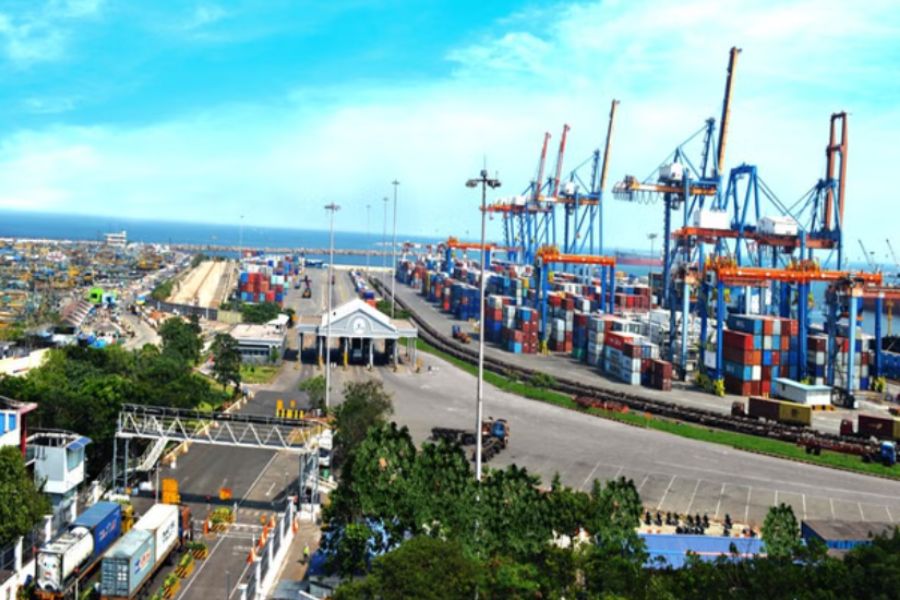
The first phase of Ramayapatnam Port has been developed by the Andhra Pradesh government through the Engineering, Procurement and Construction (EPC) model at an estimated cost of ₹4,929.39 crore.The project includes four berths—one coal berth and three multipurpose berths—along with breakwaters, dredging and other core infrastructure. Once operational, the first phase is expected to handle 34.08 million metric tonnes (MMT) of cargo annually.What is changing?Instead of operating the port itself, the government now plans to appoint a private concessionaire to operate, maintain and expand the port.The selected developer will be required to:
- Pay an upfront premium of ₹1,500 crore to the government.
- Invest around ₹6,804 crore to develop the next three phases.
- Expand the port from 4 berths to 23 berths.
- Increase cargo handling capacity from 34.08 MMT to 138.54 MMT per year.
- Develop container yards, storage facilities, marine services, IT systems, automation and port security infrastructure.
- Bring in an international container terminal operator.
- Provide marine services to BPCL’s proposed facilities.
The concession period will be 30 years, with an option to extend it by another 20 years.
Government’s Justification
The state government maintains that the decision is aimed at monetising public investment, reducing financial burden and accelerating port development.
Officials argue that while the government has already created the core infrastructure, the next phase will require massive investments that would otherwise place additional pressure on state finances.
By bringing in a private operator, the government expects to:
- Recover part of its investment through the ₹1,500-crore upfront premium.
- Receive a continuous share of revenue from port operations.
- Avoid borrowing for the remaining expansion.
- Benefit from the operational expertise and global marketing network of experienced port operators.
The government will also retain a 12% equity stake in the Special Purpose Vehicle (SPV), with the remaining 88% held by the selected private developer. Officials say this allows the state to remain a stakeholder while leveraging private-sector efficiency.
YSRCP alleges privatisation
The opposition YSR Congress Party has criticised the move, alleging that the government is handing over a strategic public asset built with taxpayers’ money to private companies.
YSRCP leaders argue that after investing nearly ₹5,000 crore in developing the port, the government should operate it itself instead of transferring operations to private entities.
The party has also questioned the lease terms, including the proposal to provide 850.79 acres of land to the concessionaire on lease and the long concession period of up to 50 years (30 years, extendable by another 20 years).
According to the opposition, the government should allow the port to generate revenue for the state instead of sharing future earnings with a private operator.
Government says ownership remains with the state
Government officials reject the charge that Ramayapatnam Port is being “sold” or permanently privatised.
They point out that the arrangement is a public-private partnership (PPP) under the DBFOT model, under which the land and port assets continue to belong to the government.
The private concessionaire will only have the right to develop, operate and maintain the port during the concession period. At the end of the agreement, all assets will revert to the government.
Officials also note that several successful ports in India, including Krishnapatnam Port, have demonstrated how private operators can attract cargo, global shipping lines and investments more efficiently than government-run ports.
A long-term vision
The government’s long-term plan is to transform Ramayapatnam into one of India’s major deep-water ports capable of handling over 138 million tonnes of cargo annually.
Whether the PPP model succeeds will depend on the government’s ability to attract a strong private operator, ensure timely expansion and maximise economic benefits while safeguarding public interest.