

From Our Correspondent
Amaravati: In a significant move to accelerate the development of the capital, the Andhra Pradesh Cabinet on Frdapproved the second phase of land pooling in the Amaravati capital region. The decision marks a major expansion of the capital project after years of uncertainty and slowdown.
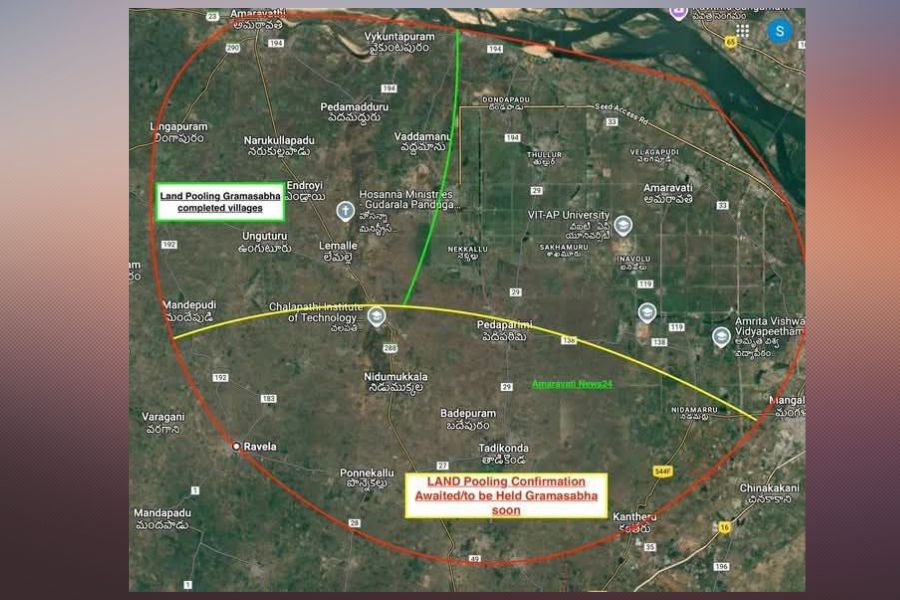
The Cabinet, which met for nearly three hours, cleared the pooling of 16,666.5 acres across seven villages—Vaikunthapuram, Peddamadduru, Endrayi, Karlapudi, Vadlamanu, Harischandrapuram and Pedaparimi. Officials said the land will be used for key capital-region projects, including the railway station, sports city, inner ring road, smart city components and airport-linked infrastructure.
Urban Development Minister P. Narayana said the government is taking up the process only with farmers’ consent, emphasising that land pooling remains a cooperative model. “The first phase saw the pooling of 33,000 acres across 29 villages. Now, another 16,666 acres will be added as part of capital expansion. Amaravati needs this land for large-scale facilities such as an international sports city capable of hosting the Olympics,” he said.
Background
The first phase of Amaravati’s land pooling—undertaken between 2014 and 2016 under the earlier Naidu government—was widely regarded as a landmark model in India, bringing together over 29 villages and 33,000 acres voluntarily contributed by farmers in return for developed plots. The initiative stalled during the previous administration, which proposed shifting the capital. With the TDP returning to power in 2024, the Amaravati capital project has been revived, with renewed infrastructure plans and Central engagement.
The latest Cabinet approval is expected to fast-track the Amaravati Master Plan, including transportation hubs, residential districts, administrative zones and economic clusters. The government said the second phase is crucial for executing large-scale, contiguous development essential for a modern greenfield capital.
Officials believe the move sends a strong message that Amaravati’s development is firmly back on track, with farmers again playing a central role in the capital’s revival.