

By Ramesh Kandula
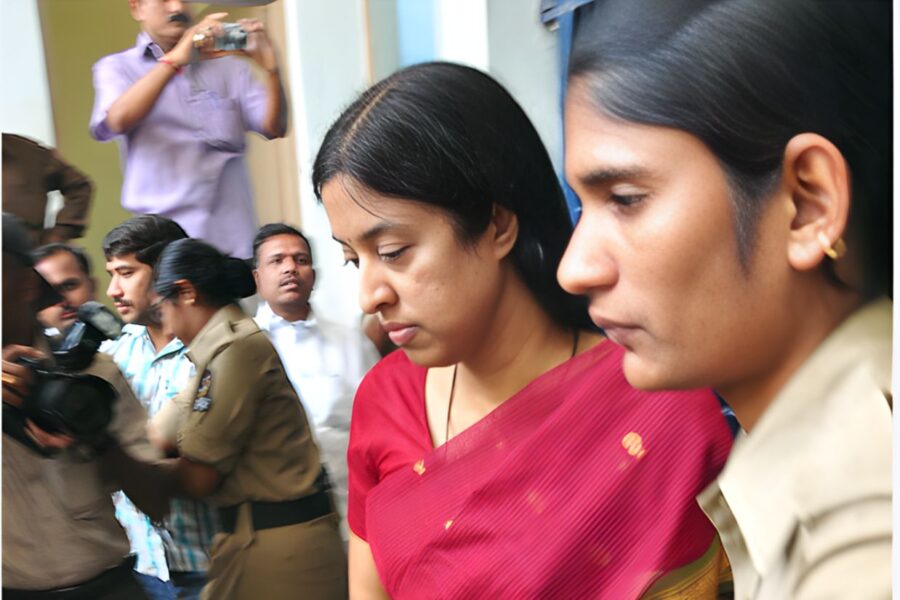
Senior IAS officer Y. Srilakshmi — a 1988-batch officer who should ordinarily have been among the frontrunners for Chief Secretary — is once again facing criminal prosecution. The Supreme Court on Tuesday has refused to discharge her from the Obulapuram Mining Company (OMC) illegal mining case. The ruling effectively revives the trial against her in the CBI court at Nampally.
What the Supreme Court decided
The Supreme Court dismissed her plea seeking discharge and upheld the Telangana High Court’s earlier decision that there is sufficient prima facie material to proceed with trial. This means the criminal proceedings against her will continue.
Her argument was straightforward: she claimed there was no substantive evidence against her and that she merely implemented government policy decisions taken at the political level. But the courts have consistently held that her role requires examination during trial.
The core allegation: misuse of official position
The case revolves around mining leases granted to Obulapuram Mining Company, owned by mining baron and former Karnataka minister Gali Janardhan Reddy.
The CBI alleges that:
-
As Industries Secretary (2006–2009), Srilakshmi facilitated preferential treatment to OMC.
-
Administrative decisions were expedited to benefit the company.
-
Competing applicants were sidelined.
-
Critical conditions — especially relating to captive mining — were diluted or omitted.
Investigators claim this enabled illegal iron-ore extraction worth thousands of crores. CBI’s estimate is that Gali Janardhana Reddy made Rs 4,310 Crore by illegally selling off iron ore, meant for proposed Brahmani Steel Plant.
The prosecution theory is not that she personally mined ore, but that bureaucratic decisions taken under her authority created the enabling framework for the alleged illegal mining.
Why “captive mining” matters
One of the most important technical issues in the case is the concept of captive mining.
Captive mining leases are granted on the condition that the mineral extracted will be used for a specific industrial project — in this case, a proposed steel plant. If ore is instead sold commercially, it becomes a violation.
The allegation is that the final government orders did not adequately enforce this restriction, allowing OMC to mine and export iron ore instead of using it for the intended plant.
That omission — whether deliberate or administrative — sits at the heart of the criminal case against the officer.
Long legal journey: 15+ years
The litigation history explains why the issue has resurfaced now:
-
2011–12: CBI names her in supplementary chargesheet; she is arrested and spends months in jail.
-
Trial court: Rejects her discharge plea.
-
2022: Telangana High Court initially discharges her.
-
Supreme Court: Sets aside that relief and orders reconsideration.
-
2025: High Court again refuses discharge.
-
2026: Supreme Court upholds High Court — trial must proceed.
This procedural back-and-forth is typical in high-profile corruption prosecutions involving senior civil servants.
Impact of earlier convictions
The context also changed significantly after 2025, when a CBI court convicted Janardhan Reddy and others in the same case and sentenced them to seven years in prison (currently under appeal).
Once co-accused are convicted on the underlying facts, courts become less inclined to discharge other accused whose roles are alleged to be interconnected.
Bureaucratic defence vs judicial scrutiny
Srilakshmi’s principal defence has been institutional: A secretary implements government decisions and cannot be crimina lly liable for policy choices made by elected leaders.
However, Indian criminal jurisprudence draws a distinction between:
-
Policy decisions (political responsibility)
-
Execution involving discretion (bureaucratic responsibility)
Courts appear to believe her actions fall into the second category — hence the insistence on trial.
Career consequences
The professional fallout has already been severe:
-
She is among the most senior officers in the Andhra Pradesh cadre.
-
Yet she has spent long periods without postings.
-
The case has effectively stalled what would otherwise have been a top-tier administrative career trajectory.
Regardless of the final verdict, the reputational and career damage is already substantial — a recurring reality in prolonged corruption litigation involving civil servants.
What happens next
The Nampally CBI court will resume trial proceedings to determine:
-
Whether administrative decisions constituted criminal conspiracy or abuse of office.
-
Whether there was mens rea (intent) or merely procedural lapse.
-
Whether financial benefit flowed to the accused.
Conviction could lead to imprisonment similar to that imposed on other accused; acquittal would end a legal battle spanning over a decade and a half.