

By Ramesh Kandula
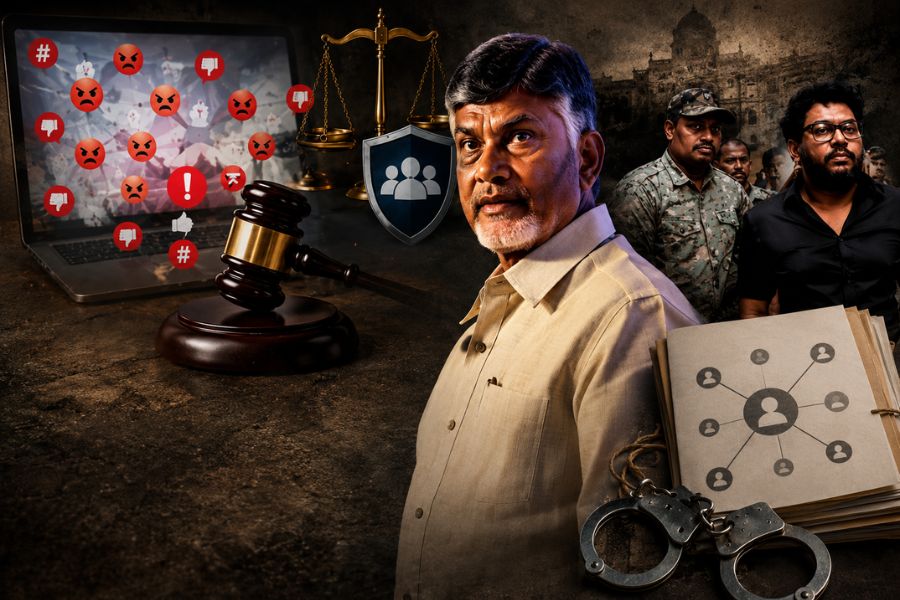
The Andhra Pradesh government’s decision to create a dedicated task force to deal with social media transgressions marks an acknowledgement of a growing challenge.
The numbers themselves are striking. Between June 2024 and June 2026, police registered 1,690 cases relating to the misuse of social media and character assassination—an average of 2.32 cases every day. Action, ranging from arrests to notices under Section 41A of the Code of Criminal Procedure, was taken against 1,538 individuals.
These figures suggest that social media abuse is no longer an isolated phenomenon but a persistent law-and-order issue. The rapid spread of fabricated content, morphed images, abusive campaigns and coordinated character assassination can cause lasting damage to individuals, institutions and public discourse. Governments cannot simply ignore such developments.
At the same time, the current enforcement mechanism leaves much to be desired.
One of the biggest problems is the absence of specialised expertise. Social media investigations require an understanding of digital evidence, online ecosystems, anonymous accounts and platform-specific technologies. Traditional policing methods are often inadequate. Investigators also need sophisticated digital tools that many police units currently lack.
Another concern is the perception of political bias. In many instances, cases are initiated following complaints from political parties or public representatives. This inevitably raises questions about whether the criminal justice system is addressing genuine offences or being drawn into political battles. Such perceptions weaken public confidence, irrespective of the merits of individual cases.
The legal framework also needs updating. Existing provisions under the Information Technology Act, criminal defamation laws and other penal statutes were not designed for today’s highly networked digital environment. Coordinated online harassment, anonymous trolling, deepfakes and organised character assassination require more precise legal definitions and investigative standards.
The government’s proposed reforms address several of these shortcomings. A dedicated task force headed by an IG-rank officer, a specialised social media response cell, modern forensic tools to identify anonymous accounts and prosecutors trained specifically in digital offences could significantly improve both investigations and prosecution. The proposal to study international legal models before drafting new legislation is also a sensible approach.
Equally important is the recognition that cyber fraud and social media abuse are distinct categories of crime. Financial cybercrime demands technical expertise in banking fraud and digital transactions, while online defamation and coordinated misinformation require a different investigative skill set. Treating them separately should improve institutional effectiveness.
Yet the government’s greatest challenge will not be technological or legal—it will be constitutional.
Freedom of speech includes the freedom to criticise governments, question public officials and engage in robust political debate. Democracies thrive on dissent, not unanimity. Any new legal framework that blurs the line between malicious character assassination and legitimate criticism risks becoming counterproductive.
The credibility of the proposed reforms will therefore depend on how they are implemented. The task force should investigate deliberate falsehoods, impersonation, fabricated evidence, threats and coordinated harassment—not criticism, satire or political opinion, however uncomfortable these may be for those in power.
The golden principle is straightforward: punish malicious abuse, protect legitimate expression.
If Andhra Pradesh succeeds in maintaining that balance, it could create a modern framework that protects both individual reputations and democratic freedoms. If it fails, the new system risks being viewed as another instrument for policing political speech rather than combating genuine digital abuse.
The government’s intentions appear constructive. Its legacy, however, will be determined by whether the new institutions enforce the law impartially and uphold the constitutional right to free expression with equal conviction.
1 Comment