

Ramesh Kandula
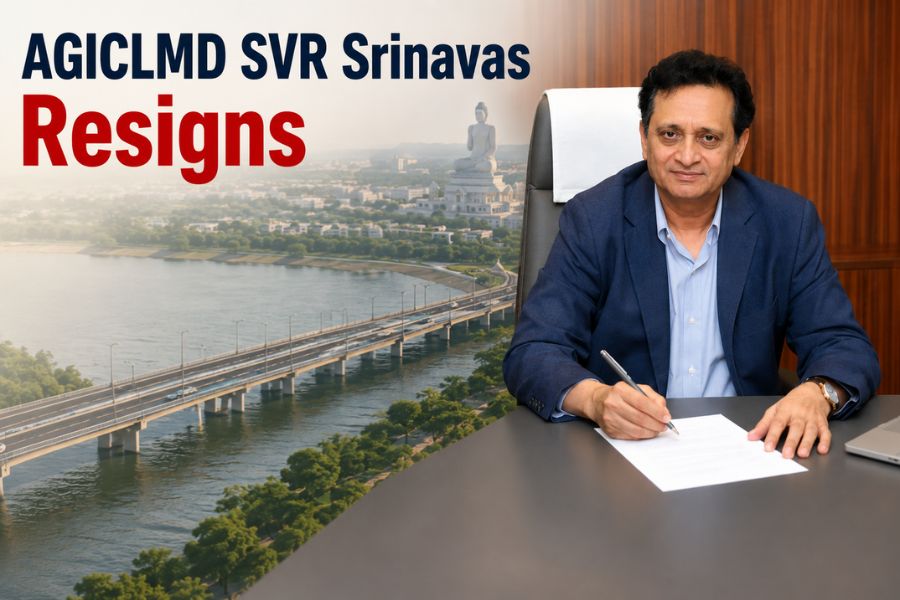
Amaravati: The Andhra Pradesh government has accepted the resignation of S.V.R. Srinivas (Sonti Venkata Ratna Srinivas), the Managing Director of the Amaravati Growth and Infrastructure Corporation Limited (AGICL), bringing an end to his six-month tenure at the helm of the agency responsible for executing key infrastructure projects in the state’s capital region.
The government accepted his resignation citing “personal reasons”, but multiple media reports and sources familiar with the developments indicate that persistent bureaucratic hurdles, overlapping administrative authority and lack of coordination among departments played a significant role in his decision to step down.
Key Agency for Amaravati Development
AGICL was established as a special-purpose vehicle to oversee the entire lifecycle of high-value infrastructure projects in Amaravati, including planning, financing, execution and long-term management.
The corporation is tasked with implementing several marquee projects such as the proposed greenfield airport, iconic bridges, riverfront development and other major urban infrastructure initiatives in the capital region.
Bureaucratic Challenges
According to sources, Srinivas found it increasingly difficult to execute projects due to inadequate cooperation from the Andhra Pradesh Capital Region Development Authority (APCRDA) and the Municipal Administration and Urban Development (MA&UD) Department.
Officials familiar with the matter said delays in inter-departmental coordination and non-compliance with AGICL’s operational requirements frequently hampered decision-making and project execution.
Overlapping Authority
One of the major issues reportedly raised by Srinivas was the existence of multiple layers of bureaucracy within APCRDA.
The presence of several IAS officers serving as Additional Commissioners allegedly created overlapping responsibilities and blurred lines of authority, resulting in slower administrative decisions on projects that AGICL was expected to implement.
Alleged Power Struggle
Sources also pointed to an administrative power struggle following changes in the CRDA leadership.
After the appointment of a new CRDA Commissioner, AGICL’s role in executing major infrastructure projects was reportedly diminished, with key decisions increasingly being routed through the CRDA hierarchy instead of the specialised infrastructure corporation.
Officials said this reduced AGICL’s operational autonomy and affected its ability to function as an independent project implementation agency.
Second Attempt to Quit
This was not Srinivas’s first attempt to resign.
Earlier during his tenure, he had reportedly proceeded on leave and submitted a resignation citing similar operational difficulties. Chief Minister N. Chandrababu Naidu is understood to have personally intervened at the time and persuaded him to continue, assuring him of greater administrative autonomy.
However, sources said the issues remained unresolved, prompting Srinivas to send his final resignation through email on June 1.
Additional Charge Assigned
Following the acceptance of his resignation, the government has entrusted APCRDA Additional Commissioner Abhishek Kumar with the full additional charge of Managing Director, AGICL, until further orders.
A Distinguished Career
Before joining AGICL, S.V.R. Srinivas, a 1991-batch Maharashtra cadre IAS officer, built a distinguished career in urban infrastructure, serving as Metropolitan Commissioner of the Mumbai Metropolitan Region Development Authority (MMRDA) and later as CEO of the Dharavi Redevelopment Project. During his tenure in Maharashtra, he played a key role in advancing several landmark infrastructure initiatives, including the Mumbai Trans Harbour Link (Atal Setu), expansion of the Mumbai Metro network, and major urban redevelopment and public-private partnership (PPP) projects.
Questions Over Amaravati Governance
Srinivas’s resignation comes at a crucial stage when the state government is attempting to accelerate the development of Amaravati after reviving several long-pending infrastructure projects.
While the government has reiterated its commitment to fast-tracking the capital city’s development, the exit of the head of its dedicated infrastructure corporation has raised questions about administrative coordination between AGICL, APCRDA and other departments responsible for delivering the ambitious Amaravati project.
Although the government has officially cited personal reasons for accepting the resignation, the reported administrative differences underscore the governance challenges involved in implementing one of Andhra Pradesh’s most significant infrastructure programmes.