

From Our Correspondent
Amaravati: The Andhra Pradesh Capital Region Development Authority (APCRDA) has begun land acquisition proceedings to secure the remaining 494 acres required for completing Phase-I infrastructure in Amaravati, triggering fresh protests from farmers in Penumaka and Undavalli villages.
The government says the acquisition is essential to remove bottlenecks in road connectivity and complete the capital city’s first phase by 2028. However, farmers argue that they are being forced to part with highly fertile land despite earlier assurances that Amaravati would be developed primarily through the Land Pooling Scheme (LPS).
Farmers boycott hearings
Revenue officials conducted hearings on Monday as part of the land acquisition process. However, a large number of affected farmers reportedly boycotted the hearings and staged protests, alleging that the government was attempting to acquire their land against their wishes.
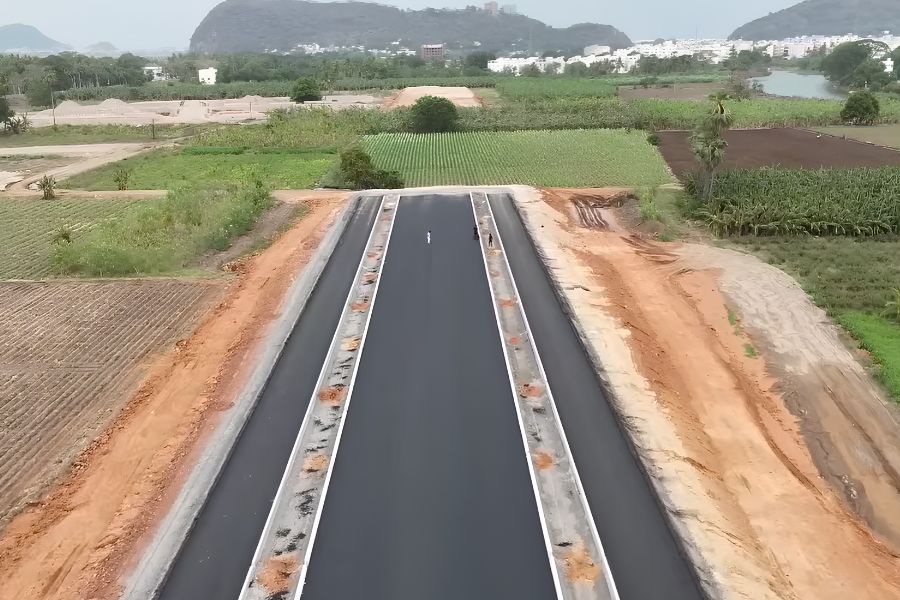
According to officials, the acquisition relates to land required for major infrastructure works, including roads and public utilities, in areas where land pooling could not be completed.
The affected farmers have already approached the Andhra Pradesh High Court, challenging the acquisition proceedings. They contend that the government is invoking compulsory acquisition even before exhausting other alternatives and that the move violates earlier judicial directions relating to Amaravati.
Why is land acquisition required?
The Amaravati capital project was originally conceived under the Land Pooling Scheme, under which farmers voluntarily surrendered their agricultural land in return for developed residential and commercial plots, annual annuities and other benefits.
More than 34,000 acres were pooled from nearly 29,000 farmers, making it one of the largest voluntary land pooling exercises in the country.
However, certain stretches in Penumaka and Undavalli did not come under land pooling. According to the government, these parcels are now required to complete key infrastructure corridors and eliminate gaps in the master plan.
Officials say without these lands, some roads and infrastructure projects cannot be completed as planned.
Government cites urgency
The state government maintains that only a small portion of land remains to be acquired and that the project cannot be delayed further.
Chief Minister N. Chandrababu Naidu has repeatedly stated that Phase-I infrastructure of Amaravati will be completed by 2028 and that all pending obstacles are being addressed on priority.
Officials say the remaining land is critical for completing the capital city’s planned road network and civic infrastructure.
Legal battle likely to continue
With farmers challenging the acquisition in the High Court and refusing to participate in the hearings, the issue is likely to remain one of the key legal and political challenges facing the Amaravati capital project.
The outcome of the court proceedings could determine whether the government proceeds with compulsory acquisition or is required to explore alternative methods for securing the remaining land needed for the capital’s development.